Sport science,
coaching, and education.
Dr. Jacob Goodin is a professor of kinesiology and sport physiologist at Point Loma Nazarene University. His work centers on one question: how can sport science help coaches, students, and athletes make better decisions? It runs through his teaching, his coaching, the free education he publishes on YouTube, and the CSCS Accelerator.
PhD in Sport Physiology · PhD, CSCS, CPSS · Professor of Kinesiology, PLNU
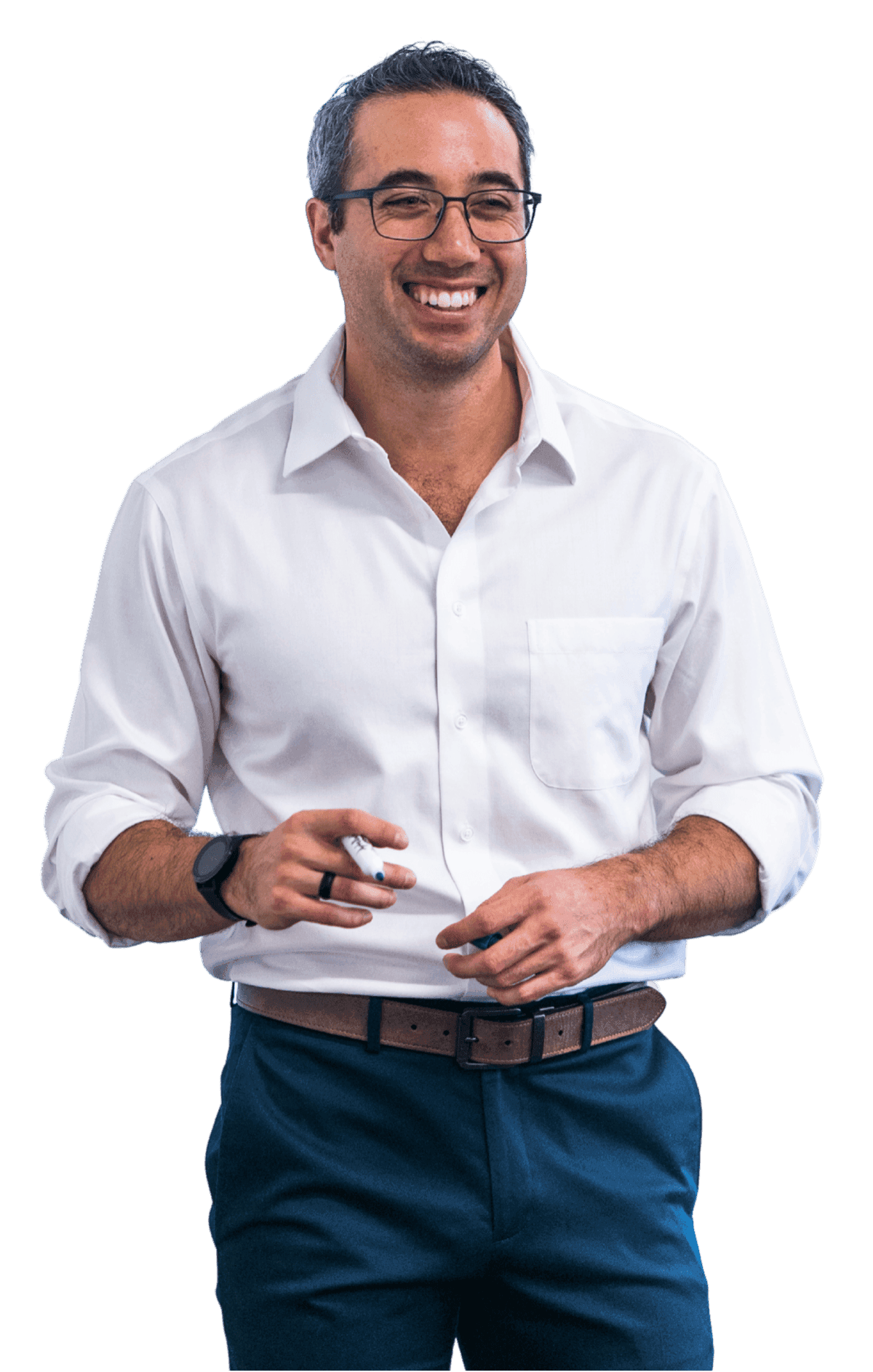
Teaching, coaching, and research that inform each other.
Sport science can be hard to navigate. Papers are dense, coaching debates get overconfident, and social media rewards simple answers to questions that are not simple. The goal here is not to make everything sound easy. It is to make it understandable, and then usable.
Teaching
Reveals where people get stuck, and which explanations actually land.
Coaching
Reveals where the theory holds up, and where it does not.
Research
Helps separate reasonable claims from confident guesses.
Public education
Forces technical material to become clear enough to use.
Day to day, that looks like teaching undergraduate and graduate courses at PLNU, coaching endurance athletes (including his wife Lisa Goodin, a competitive distance runner and marathon Olympic Trials qualifier), consulting for professional teams and companies on testing and performance data, and breaking down the physiology and coaching behind performance on YouTube. Each part sharpens the others.
A few principles.
Accuracy over certainty
Sport science rarely gives perfect answers. That does not make every opinion equal. Weigh the evidence, name the limitations, highlight the uncertainties, and decide carefully.
Human physiology doesn't change
People start from different genetic points and adapt on different timelines. But the underlying physiology is the same, so the science can guide training with directional clarity, even when the exact magnitude takes some dialing in.
Clarity without distortion
A hard idea should be explained clearly. It should not be simplified until it is wrong.
Application over collection
More data does not mean better decisions. A metric earns its place only if it changes what you do.
Education without gatekeeping
Technical material should be accessible to anyone willing to learn it. Complicated wording is not the same as intellectual rigor.
The person before the system
Programs, models, tests, and technologies are tools. They serve the athlete or the student, not the other way around.
A resource to meet you where you're at.
Most of this content is free, and some of it is paid, but all of it is built to help you understand sport science and strength and conditioning material so you can apply it in your practice. I'm not in the business of peddling shallow courses or half-baked coaching frameworks.
Preparing for the CSCS
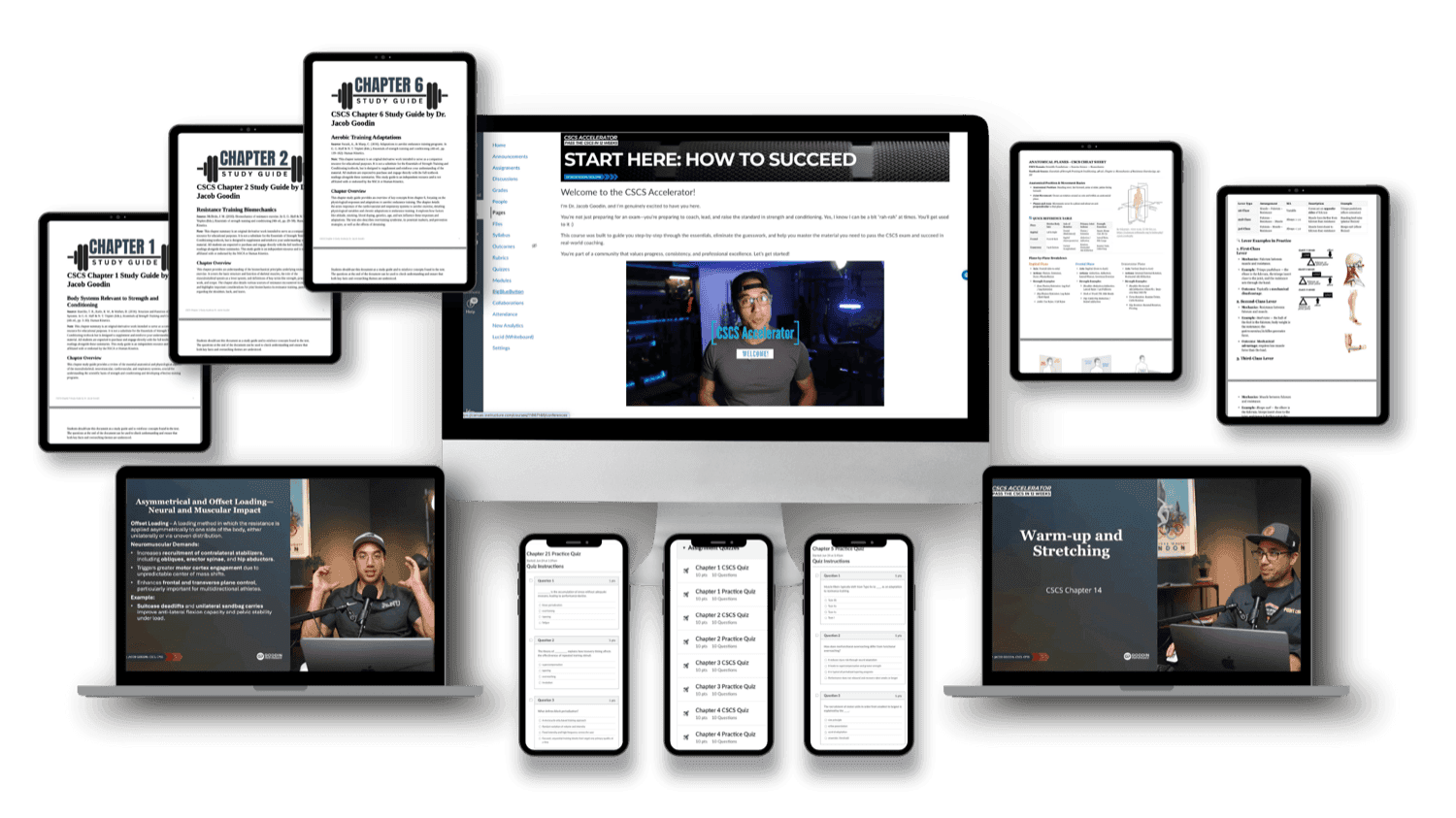
A structured course, practice questions, guided instruction, and live support.
Explore the Accelerator →Free sport science lessons
Program design, periodization, strength, power, speed, physiology, and testing. Free on YouTube.
Watch on YouTube →The study guides
All 26 chapters built around what the CSCS tests, explained the way I teach it, with review questions and glossaries.
See the guides →Am I ready for the CSCS?
Eight questions about your prep, background, and study system. Two minutes to a readiness score and your biggest gap.
Take the scorecard →Test yourself
A no-signup read on where you stand, plus unlimited practice in the quiz app.
Take the free test →More than exam prep.
Earning the CSCS is about more than reading a textbook and reciting facts, so this course aims to be more than exam prep. It is an intentional, cohort-based program with limited seats, built to give you a live mentor who walks you through the material. The goal is to make you a better coach along the way, and from that footing, to pass the exam.
New videos, CSCS resources, and sport science education.
New YouTube videos, CSCS study resources, course updates, and research breakdowns. No daily motivational emails. In fact, I often won't send you emails unless I have something really important to share.
Good coaching is a series of good decisions.
Good coaching takes more than information. It takes judgment. The aim of this work is to help coaches, students, and athletes understand the science, respect its limits, and apply it with more precision.